Metformin’s Mechanism Rewritten: Intestinal Mitochondria Take Center Stage

- Details
- Published on 12 May 2026
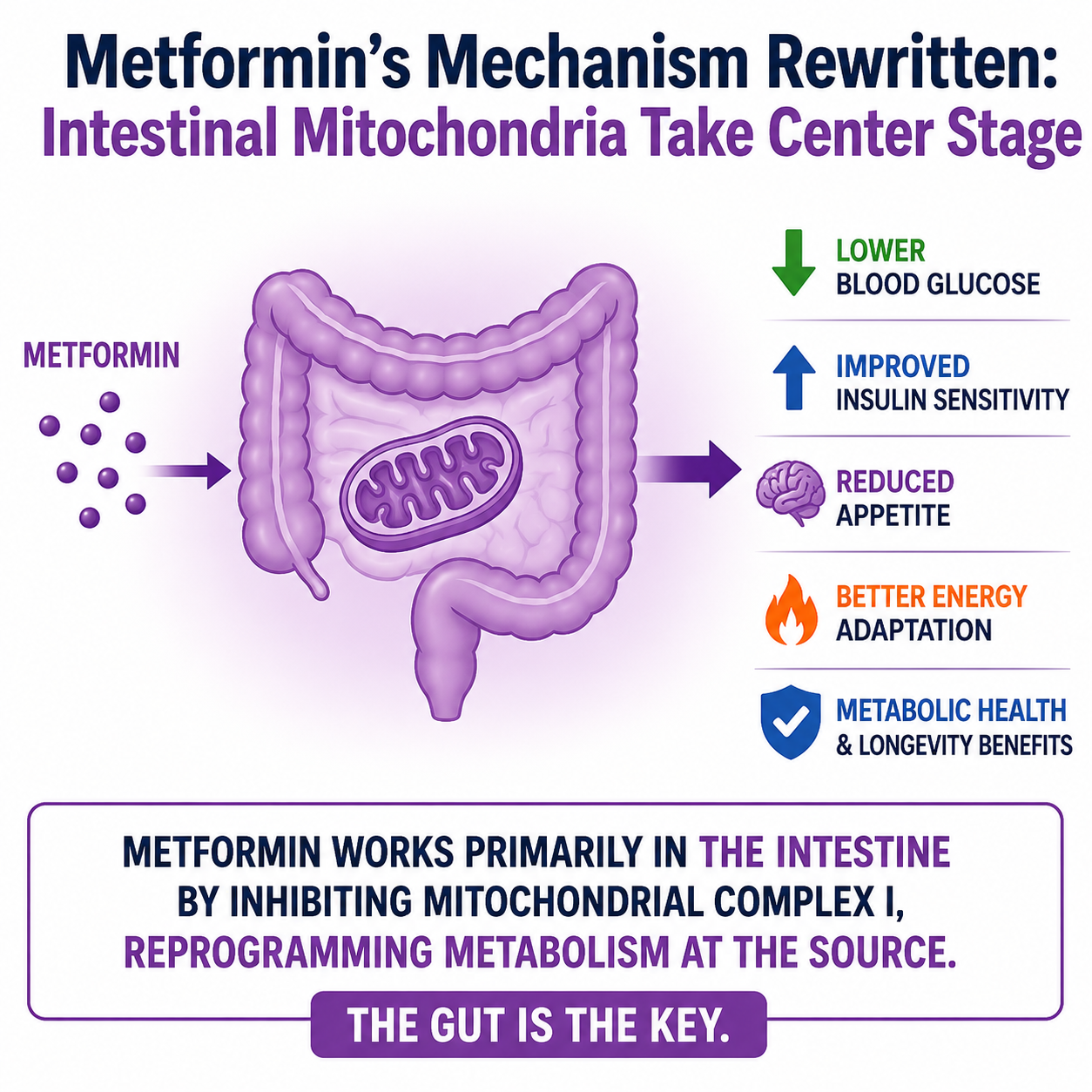 A new Nature Metabolism study challenges decades of assumptions about one of the world’s most prescribed drugs.
For decades, metformin has been described primarily as a liver-targeting diabetes drug that suppresses hepatic glucose production.
The study published by Navdeep S. Chandel, Zachary L. Sebo and colleagues from Northwestern University Feinberg School of Medicine, Chicago, USA proposes a major shift in this paradigm: metformin may exert its primary metabolic effects through the intestine by directly modulating mitochondrial function in gut epithelial cells.
The researchers demonstrate that metformin inhibits mitochondrial complex I within intestinal epithelial cells, triggering a metabolic reprogramming that increases intestinal glucose utilization and reshapes systemic glucose homeostasis.
This finding reframes metformin not simply as a glucose-lowering agent, but as a mitochondrial signaling modulator acting through the gut.
Beyond the Liver: A New View of Metformin
The study helps unify several long-standing observations associated with metformin treatment, including:
- Increased intestinal glucose uptake
- Altered lactate metabolism
- Gastrointestinal side effects
- Gut-mediated metabolic signaling
- Systemic adaptations linked to energy sensing
Rather than viewing these effects as secondary phenomena, the new work positions intestinal mitochondrial adaptation as a central therapeutic mechanism.
A Broader Shift in Mitochondrial Medicine.
The implications extend beyond diabetes.
The study reinforces an emerging concept in mitochondrial biology: therapeutic benefit may arise not from simply enhancing mitochondrial activity, but from precisely modulating mitochondrial stress and adaptation.
This aligns with growing interest in:
- Mitohormesis
- Adaptive bioenergetics
- Tissue-specific mitochondrial signaling
- Resilience-based therapeutic strategies
The findings may also influence future approaches in obesity, aging, metabolic disease, and longevity research, where the gut–mitochondria axis is increasingly recognized as a major regulator of systemic physiology.
A New Question for Metabolic Medicine
The work raises an important conceptual question for the field:
Should mitochondrial medicine focus on maximizing mitochondrial performance or on intelligently redirecting mitochondrial adaptation?
As mitochondrial biology moves from static models toward dynamic systems regulation, metformin may represent one of the earliest and most successful examples of therapeutic mitochondrial reprogramming.
Read the complete news here
Read the news on LinkedIn