Can We Restore Ageing Muscle by Reorganizing Its Mitochondria?

- Details
- Published on 30 August 2026
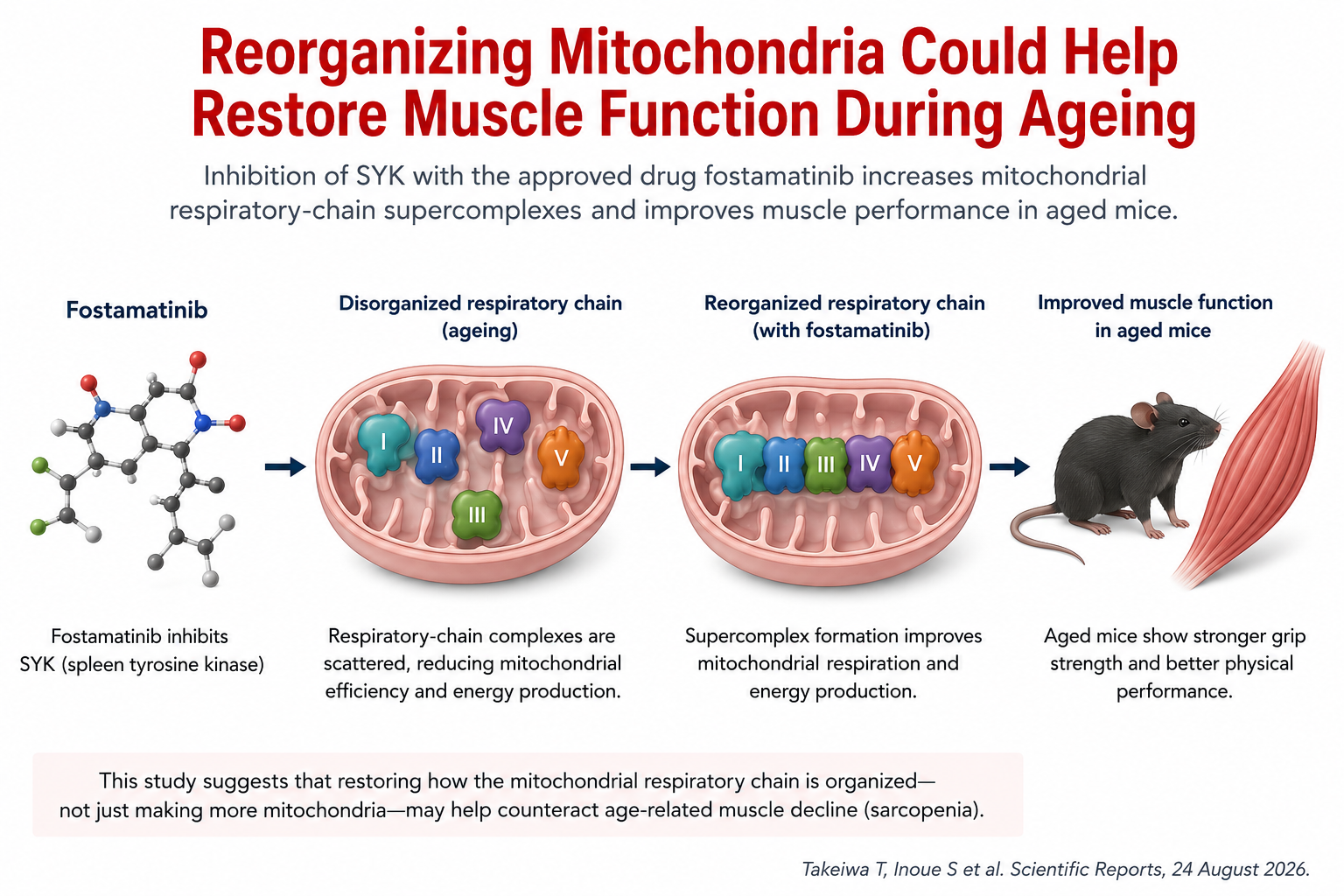
A new study published in Scientific Reports points to an intriguing strategy against age-related muscle decline: targeting the structural organization of the mitochondrial respiratory chain.
Toshihiko Takeiwa, Satoshi Inoue and colleagues investigated fostamatinib, an approved inhibitor of spleen tyrosine kinase (SYK).
Why SYK? Previous work from the group suggested that inhibiting this kinase promotes the assembly of mitochondrial respiratory-chain complexes into higher-order supercomplexes, structures thought to support efficient oxidative phosphorylation.
In C2C12 muscle cells, the active fostamatinib metabolite R406 increased respiratory-chain supercomplex formation and enhanced mitochondrial respiration.
The researchers then moved to aged mice. Fostamatinib increased mitochondrial supercomplex formation in skeletal muscle and, importantly, this molecular effect was accompanied by better grip strength and wire-hanging performance.
RNA sequencing of quadriceps muscle revealed another layer: fostamatinib increased expression of genes involved in actin nucleation and action-potential pathways, suggesting effects extending from mitochondrial bioenergetics toward the machinery controlling muscle contraction.
This is particularly interesting for sarcopenia.
Most mitochondrial strategies in ageing have focused on biogenesis, mitophagy, oxidative stress or metabolic substrates. This study highlights another possibility: perhaps mitochondrial performance can also be improved by restoring the organization of the OXPHOS machinery itself.
And because fostamatinib is already clinically approved for another indication, the work raises an obvious translational question:
Could mitochondrial respiratory-chain supercomplexes become a druggable target in age-related muscle dysfunction?
For now, the evidence is preclinical. But the concept deserves attention.
For more Information:
Read the full news here
Read the news on LinkedIn