What if mitochondrial aging begins somewhere else?


- Details
- Published on 22 July 2026
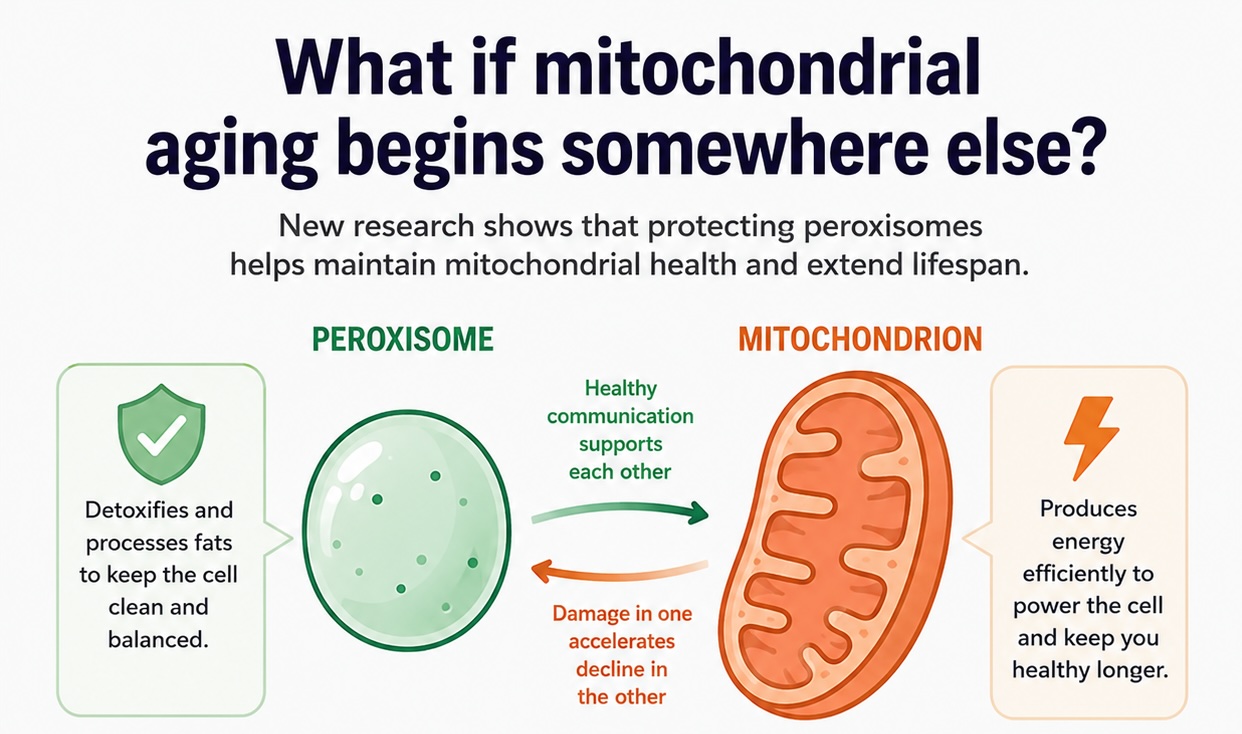
What if mitochondrial aging begins somewhere else?
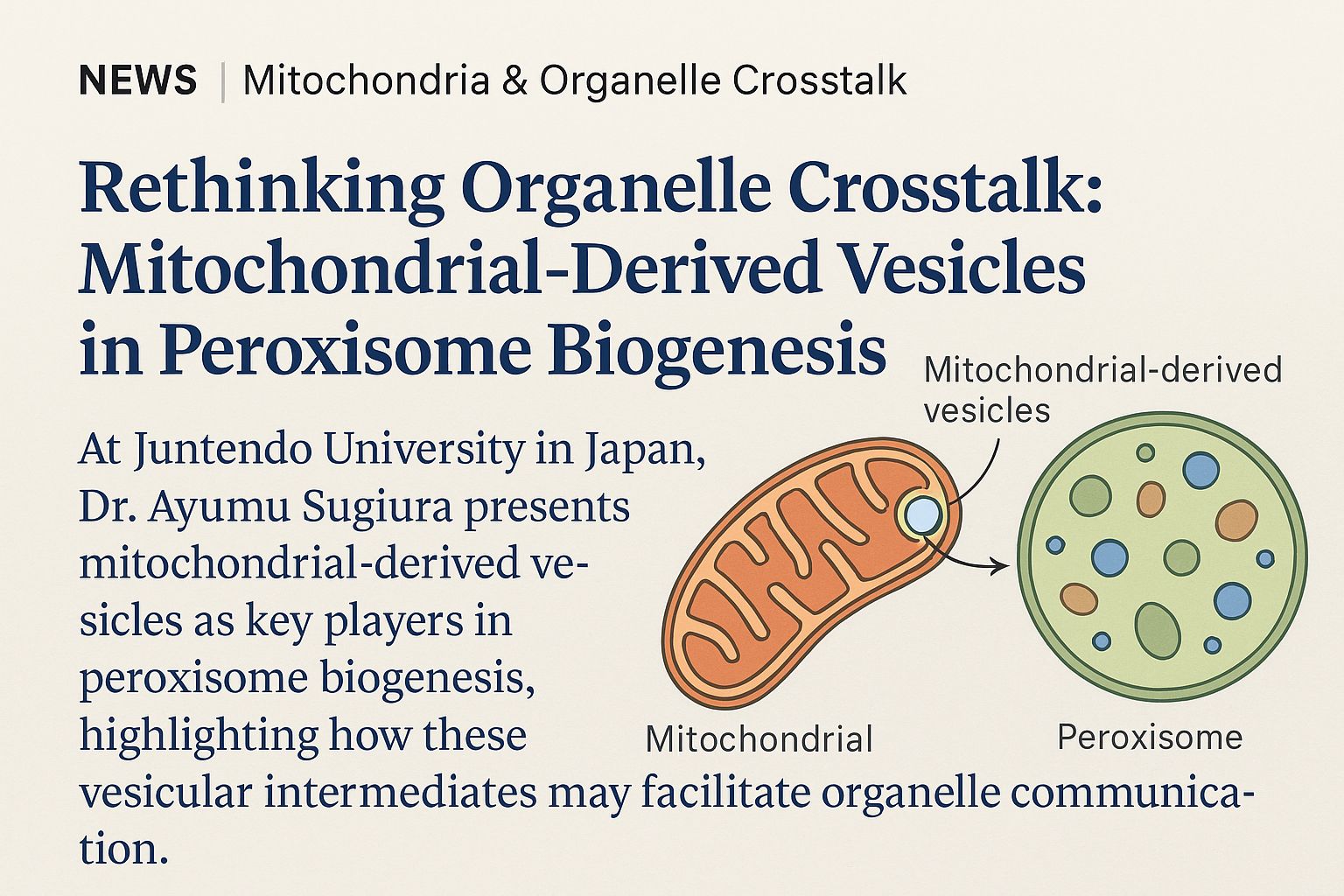
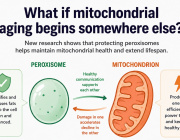
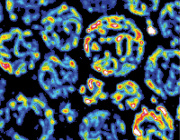
A new study published in the journal Aging suggests that mitochondrial decline may be closely linked to the loss of another essential cellular organelle: the peroxisome.
The research was conducted by Yash Flora, Dhriti Shastri, Kathryn R. DeLeo and senior corresponding author K. Adam Bohnert from the Department of Biological Sciences at Louisiana State University.
Using the model organism Caenorhabditis elegans, the researchers reduced the activity of PRX-11, a protein involved in peroxisome division and degradation.
Preserving peroxisomes helped the animals maintain:
• More connected mitochondrial networks
• Better cellular energy production
• Lower calcium accumulation
• Less oxidative stress
• Better movement during aging
• A longer lifespan
The relationship also appears to work in both directions: mitochondrial dysfunction accelerated the degradation of peroxisomes.
The study therefore presents aging not simply as the deterioration of one organelle, but as a progressive disruption of communication between cellular systems.
The findings remain preclinical and were obtained in worms. However, they identify peroxisome–mitochondria crosstalk as a potentially important field for future research into healthy aging and longevity.
For more information: Flora Y, Shastri D, DeLeo K, Bohnert K. Inhibition of peroxisomal protein PRX-11 promotes longevity in Caenorhabditis elegans via enhancements to mitochondria. Aging (Albany NY). 2026; 18:787-812. https://doi.org/10.18632/aging.206395