Mitochondria Can Move Between Cells. Can We Turn That Into Therapy?


- Details
- Published on 22 September 2026
A Stanford study shows that donor-derived immune cells can transfer functional mitochondria into diseased cells in the brain and heart, opening an unexpected therapeutic direction.
For decades, mitochondrial medicine has largely asked the same question: how can we repair dysfunctional mitochondria inside diseased cells?
A new study from Stanford suggests another possibility.
What if healthy mitochondria could simply be delivered from one cell to another?
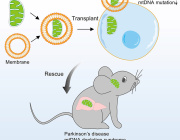
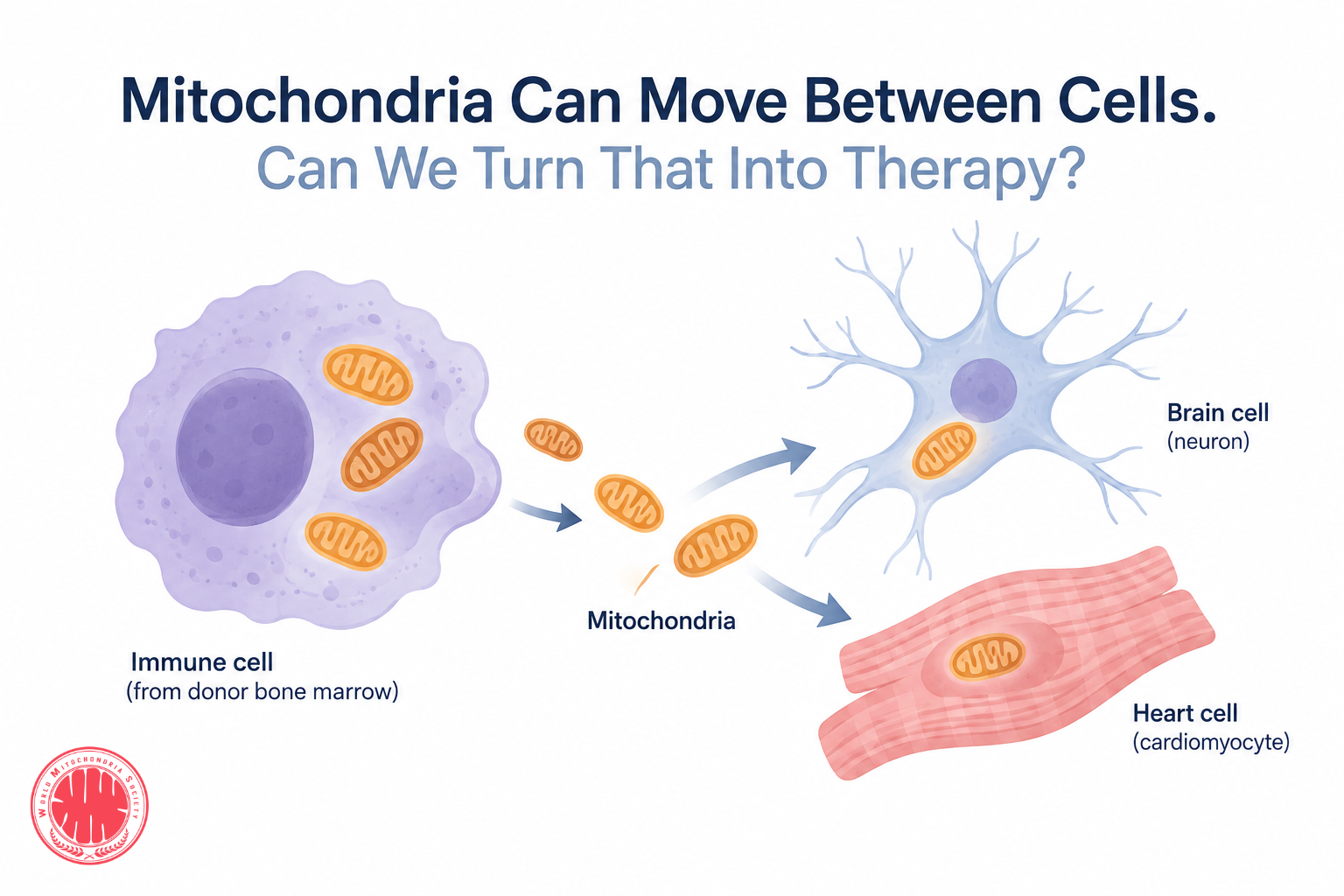
Researchers led by Hyunmin Cho and Natalia Gomez-Ospina at Stanford University report in Nature Communications that replacing myeloid cells in a mouse model of Friedreich’s ataxia enabled donor-derived microglia and macrophages to transfer their mitochondria directly into diseased cells.
The finding was also highlighted by the Stanford Report on September 22, 2026, which described bone marrow-derived immune cells as an unexpected route for delivering healthy mitochondria into tissues such as the brain and heart.
Healthy mitochondria moving into diseased cells
The researchers used a modified bone marrow transplantation strategy that allowed donor-derived immune cells to repopulate tissues.
Once established, these cells did something remarkable.
They transferred mitochondria to neighboring cells.
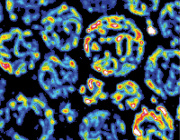
Using fluorescent labeling, the team tracked donor mitochondria from microglia and macrophages into several recipient cell populations, including neurons, oligodendrocyte precursor cells and cardiomyocytes.
The transferred mitochondria appeared to be functional.
Cells receiving them showed increased expression of pathways related to oxidative phosphorylation and ATP synthesis, while cultured frataxin-deficient cells partially recovered respiratory capacity following direct contact with donor cells.
From mitochondrial transfer to functional improvement
The effect was not limited to molecular markers.
In the Friedreich’s ataxia mouse model, myeloid-cell replacement was associated with improved survival and growth. Female mice also showed improvements in spontaneous locomotion, strength, coordination and cardiac function.
The Stanford team therefore proposes intercellular mitochondrial transfer as one mechanism underlying the therapeutic effects of myeloid-cell replacement.
It changes the way we might think about mitochondrial therapy.
Instead of attempting to deliver a therapeutic molecule independently to billions of affected cells, could mobile immune cells become living mitochondrial delivery systems?
Why immune cells could be particularly interesting
Microglia and macrophages naturally migrate through tissues and establish close contact with many different cell populations.
The Stanford Report emphasizes this biological advantage: donor-derived immune cells were able to populate tissues including the central nervous system, potentially providing access to regions that are difficult to reach using conventional drug or gene-delivery systems.
This raises an even more ambitious possibility.
A patient's hematopoietic stem cells could potentially be genetically corrected outside the body and returned, generating immune cells carrying corrected mitochondria that could subsequently distribute them into affected tissues. The Stanford researchers present this as a future direction rather than an established therapy.
A new concept for mitochondrial medicine?
The study remains preclinical. It was performed in mice, and hematopoietic transplantation requires substantial conditioning and carries significant clinical risks.
It therefore does not establish bone marrow transplantation as a treatment for patients with Friedreich’s ataxia or mitochondrial disease.
But the mechanism is important.
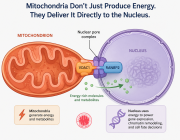
Mitochondria are increasingly emerging not only as intracellular energy-producing organelles, but as dynamic biological entities capable of moving between cells and modifying recipient-cell metabolism.
The next questions are compelling:
Can mitochondrial transfer be controlled?
Can donor cells be engineered to carry optimized or genetically corrected mitochondria?
Which tissues and diseases are most receptive to mitochondrial uptake?
And could mitochondrial transfer eventually become a therapeutic platform extending beyond rare mitochondrial diseases?
The field may be moving from repairing mitochondria to learning how to deliver them.
Source: Cho H, Sayana R, Koladiya A, et al. Myeloid cell replacement induces intercellular mitochondrial transfer and restores metabolism in a mouse model of mitochondrial disease. Nature Communications, published August 15, 2026.
Reported by the Stanford Report, September 22, 2026.
For more Information:
Read the full news here
Read the news on LinkedIn